





CliqNews Desk · EN · United States
Mashrekur Rahman joins NASA Ames as Earth observation AI research scientist
Dr Mashrekur Rahman is working with NASA’s Earth Exchange GeoAI team on machine learning tools for environmental intelligence.
Noah Fraser
26 October 2026 · 3 min
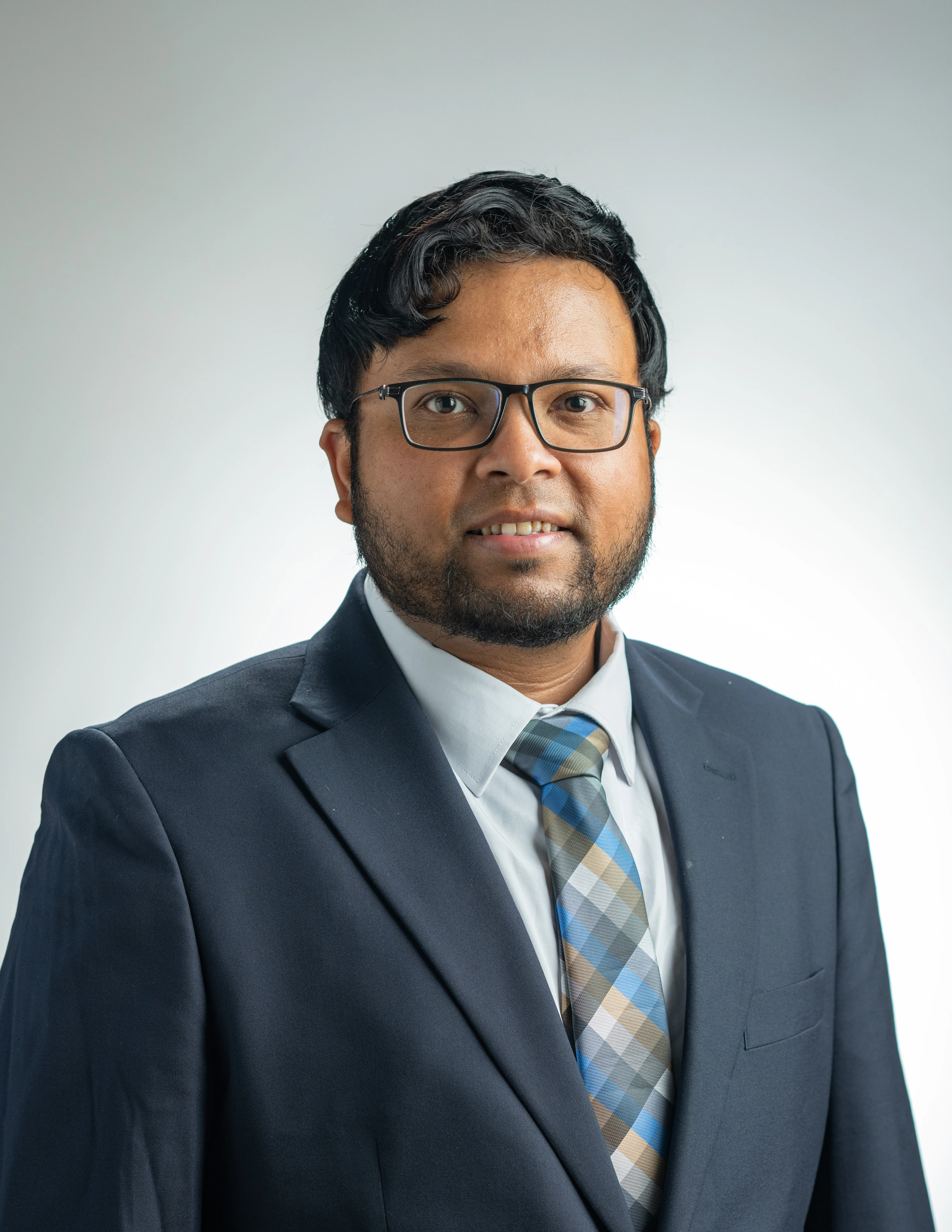
Dr Mashrekur Rahman is serving as a research scientist at NASA Ames Research Center, affiliated with the Bay Area Environmental Research Institute and the NASA Earth Exchange GeoAI team. His work sits within the Earth Science Division and focuses on artificial intelligence for Earth observation and environmental intelligence.
Rahman’s current research includes machine learning for Earth systems, geospatial foundation models, world models and agentic systems. He develops scientific evaluation and benchmarking frameworks for geospatial foundation models, while also supporting NASA-funded research teams working on user-centred applications of large Earth foundation models.
His recent projects include a physical interpretability analysis of a planetary-scale geospatial embedding model, a Land Surface Intelligence system designed to use embeddings for natural language environmental queries, and sensor-specialised world models for hydrologic reasoning. Rahman holds a PhD in Hydrologic Sciences from the University of California, Davis, and has also worked at the USDA Agricultural Research Service and Dartmouth College.
During his doctoral research at the University of California, Davis, Rahman applied natural language processing to examine changes in hydrologic research and used computer vision to model human-drought interactions and drought dynamics. His dissertation was titled “From Texts to Pixels: Leveraging Artificial Intelligence to Achieve Novel Insights into Hydrologic Research, Human-Drought Interactions, and Global Drought Prediction”. He completed the PhD in 2024, following a master’s degree in Water Resources Development from Bangladesh University of Engineering and Technology in 2016 and a bachelor’s degree in Civil Engineering from Ahsanullah University of Science and Technology in 2014.
Rahman’s earlier roles include postdoctoral scholar at the USDA Agricultural Research Service, where he developed continental-scale models of soil moisture dynamics, and AI Research Data Science Specialist at Dartmouth College, where he led cross-disciplinary AI research collaborations across fields including science, medicine, engineering and the humanities. His research has received support at different stages from NASA, NOAA, USDA and Google.
His research interests cover the evaluation of geospatial foundation models, interpretability for Earth observation, agentic geospatial intelligence, self-supervised and sensor-specialised world models, and machine learning for drought, soil moisture and streamflow prediction. He has also worked on natural language processing and computer vision methods to study scientific literature and human-environment interactions.
Rahman’s publications include work on land surface intelligence, hydrologic reasoning, soil moisture dynamics, drought awareness, streamflow prediction and remote sensing. He has presented at scientific meetings including the American Geophysical Union Fall Meeting, HydroML Symposium, European Geosciences Union General Assembly and Frontiers in Hydrology Meeting. Alongside research, he is involved in communicating AI and data science and building accessible AI literacy programmes for learners from varied backgrounds.